
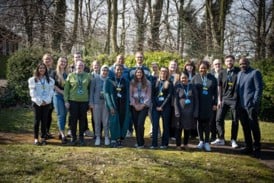

Supporting Recovery Beyond Hospital: The Intensive Community Rehabilitation Team (ICRT)
Delivered in partnership between Birmingham and Solihull Mental Health NHS Foundation Trust (BSMHFT) and Birmingham Mind, the ICRT provides personalised, intensive support to help people rebuild confidence, develop independent living skills and reconnect with their local communities after leaving inpatient mental health services. Many of the people supported by the team have experienced hospital stays lasting more than a year.
By combining clinical expertise with person-centred social support, ICRT offers a truly holistic approach to recovery. Every person’s journey is different, so support is tailored to their individual goals, strengths and aspirations.
Building confidence through connection
Recovery isn’t just about leaving hospital, it’s about creating opportunities to reconnect with the world around you.
To help tackle isolation and improve wellbeing, ICRT recently launched a weekly Walk and Talk Group.
The informal group combines gentle physical activity with conversation, giving people a relaxed environment to meet others, improve their wellbeing and build meaningful connections.
Unlike traditional support groups, there’s no expectation to share personal experiences. Conversations happen naturally while walking, helping to reduce pressure and making it easier for people to participate at their own pace.
For some individuals, simply attending a new group can be a huge achievement. Recovery Navigators work alongside people beforehand, offering travel training and practical support to help build confidence using public transport independently. These skills not only enable people to attend the group but also increase their independence in everyday life.
Creating safe spaces for women
Following feedback and a service needs analysis, ICRT has also introduced a dedicated Women’s Group.
The group provides a welcoming and supportive environment where women can connect with others, build confidence, learn practical life skills and support one another throughout their recovery.
Although facilitated by members of the ICRT team, the sessions are shaped by the women who attend, ensuring activities and discussions reflect what matters most to them.
As confidence grows, individuals are supported to access similar community-based women’s groups, helping them build lasting social networks that continue long after they’ve been discharged from the service.
Putting lived experience at the heart of recovery
Co-production is central to everything ICRT does.
Working closely with the BSMHFT Co-production Team, colleagues are ensuring that people with lived experience help shape and improve the service.
One recent example is the redevelopment of the team’s My Recovery Folder.
Originally designed by former Peer Mentors, the resource has been completely refreshed by current Peer Mentors, Alisha and Dolapo, using feedback gathered directly from people accessing the service.
Rather than a one-size-fits-all resource, the folder is now fully modular, allowing sections to be tailored to each person’s recovery journey.
Topics include:
- My Recovery
- Activities with ICRT
- Budgeting and money management
- Helpful contacts
- Crisis planning
- Understanding medication side effects
- Healthy recipes and meal planning
The new format gives people practical information, personalised recovery tools and resources they can continue to use long after their support with ICRT has ended.
Recovery is about more than treatment
The work of the Intensive Community Rehabilitation Team demonstrates that recovery extends far beyond clinical care. By helping people develop practical skills, build confidence, reconnect with their communities and shape the services they receive, ICRT is empowering individuals to live fulfilling and meaningful lives.
Through partnership working, personalised support and a strong commitment to co-production, Birmingham Mind and BSMHFT are helping people move beyond hospital and towards a future where recovery is defined by hope, independence and opportunity.
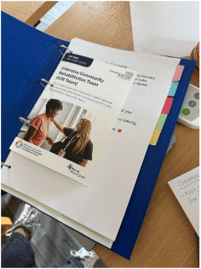
My Recovery Folder has been developed by peer mentors.
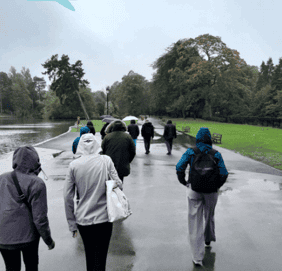
The recently launched 'Walk and Talk' Group.