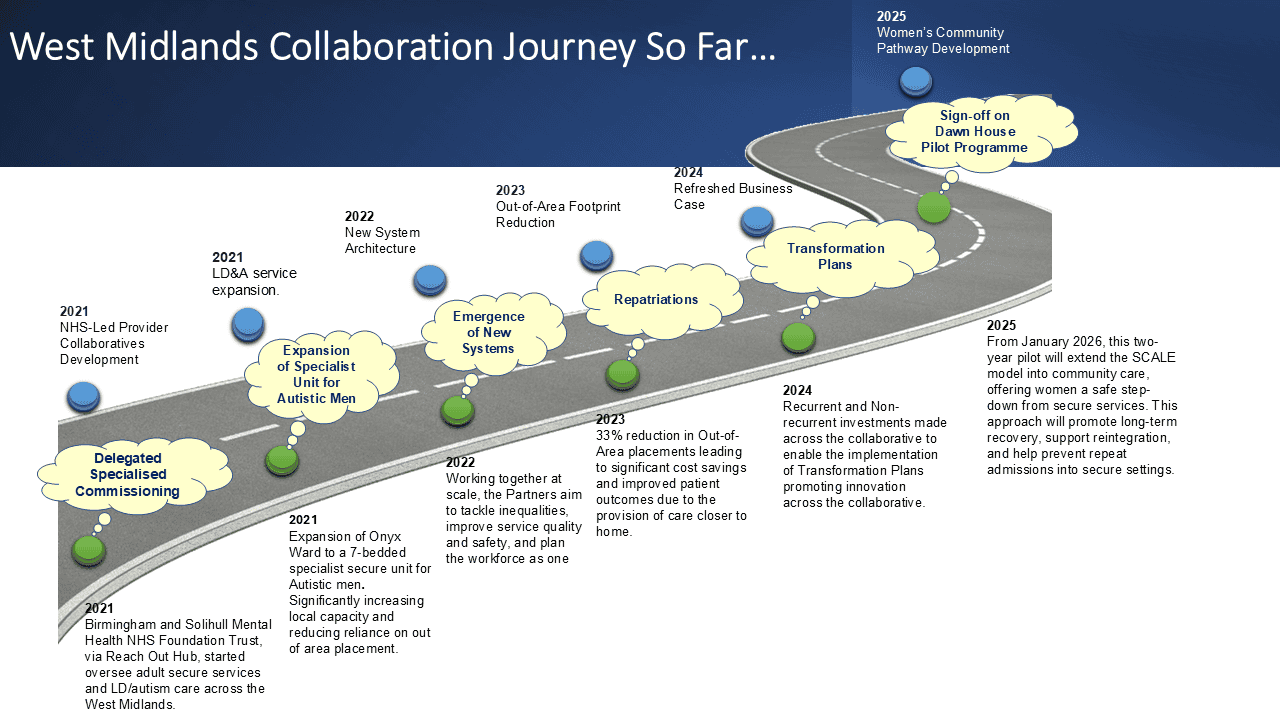

NHS-Led Provider Collaboratives Development
In October 2021, Birmingham and Solihull Mental Health NHS Foundation Trust, via Reach Out Hub, started overseeing adult secure services and LD/autism care across the West Midlands.
LD&A service expansion
Expansion of Onyx Ward to a seven-bedded specialist secure unit for Autistic men. Significantly increasing local capacity and reducing reliance on out of area placement.
2022
New System Architecture
Working together at scale, the Partners aimed to tackle inequalities, improve service quality and safety, and plan the workforce as one.


2023
Out-of-Area Footprint Reduction.
33% reduction in Out-of-Area placements leading to significant cost savings and improved patient outcomes due to the provision of care closer to home

2024
Refreshed Business Case
Recurrent and non-recurrent investments made across the collaborative to enable the implementation of Transformation Plans promoting innovation across the collaborative.
2025
Women’s Community Pathway Development
From January 2026, this two-year pilot will extend the SCALE model into community care, offering women a safe step-down from secure services. This approach will promote long-term recovery, support reintegration, and help prevent repeat admissions into secure settings.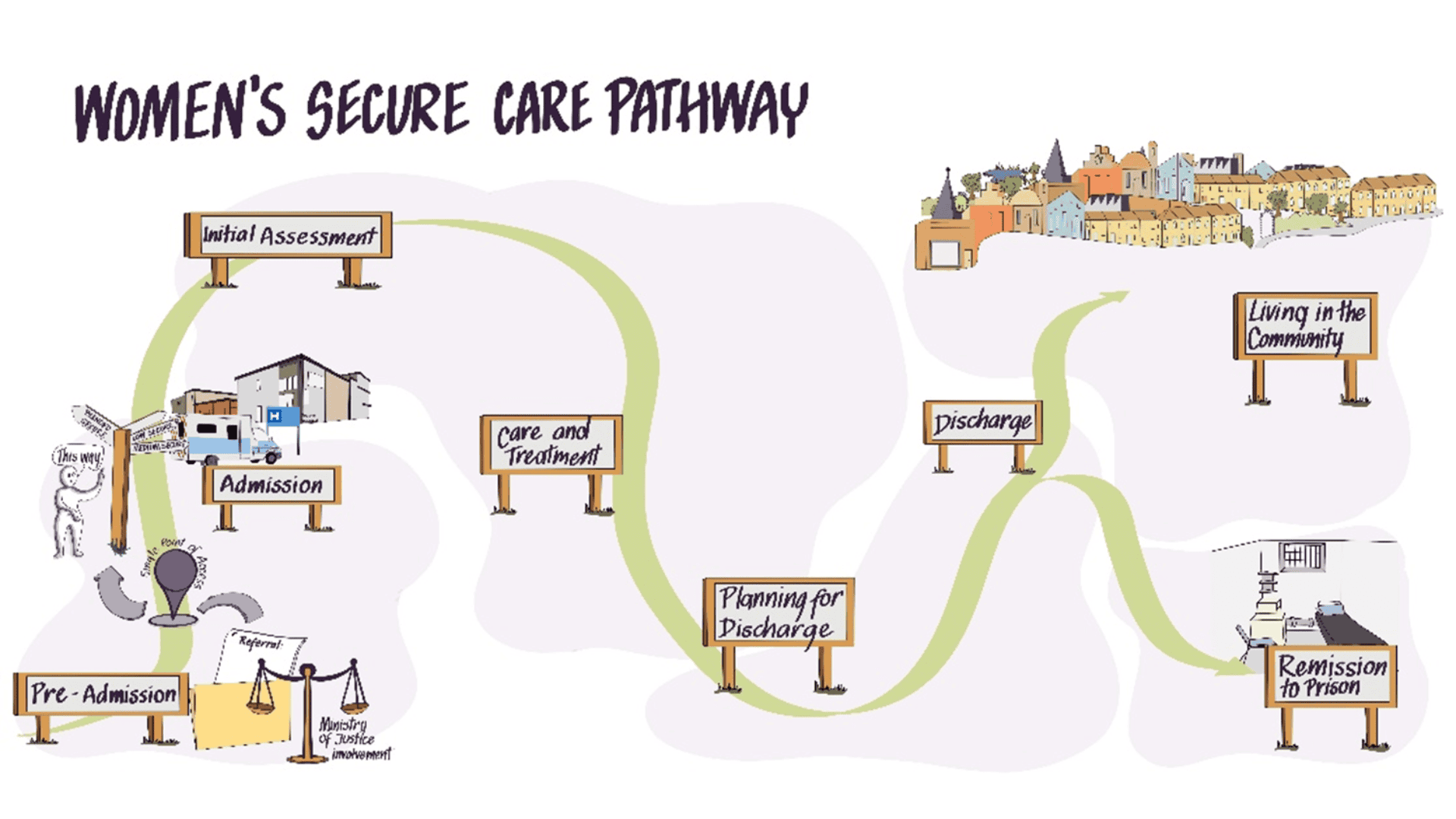
Delivering Outcomes
An outcomes framework has been co-produced with experts by experience and focuses on three key domains and key outcome statements based on input received from staff and patients. The framework ensures patients remain at the centre of our work, with families and carers actively involved in co-designing plans and services. This creates a safe, inclusive environment where everyone feels understood, valued, and supported – whatever their needs or circumstance.
| Domain | Category | Outcome Statements |
|---|---|---|
| Access and pathway efficiency | Equitable access to services | Patients will have equitable access to high‑quality care, regardless of their background, ethnicity, or disability and other protected characteristics. |
| Timely interventions | Services will be inclusive and responsive to the diverse needs of the patient population. Patients will have access to timely and effective interventions that support their mental health recovery and wellbeing. Efforts will be made to reduce waiting times and ensure prompt access to necessary services. |
|
| Patient Experience | Dignity and respect | Patients will be treated with dignity and respect at all times, with their rights and preferences upheld. Patients will have a voice in their care, with opportunities to provide feedback and participate in decision‑making. |
| Effective Communication and Collaboration | Patients will experience effective communication with their care team, ensuring they understand their treatment and care plans. Patients, families, and carers will be actively involved in the care process, fostering a collaborative approach to treatment. |
|
| Quality, Safety and Security | Patients will have access to personalised care plans that promote their recovery and long‑term wellbeing. Patients will feel supported and cared for by a compassionate, values‑based workforce who are recruited, retained, and trained to provide culturally competent, high‑quality specialist support. Patients will feel safe and secure within the care environment, with measures in place to protect them from harm in a least restrictive way. Patients will have access to support that addresses their specific safety needs, including risk management plans. Patients will receive care in high‑quality services rated “Good” or “Outstanding” by the regulator. |
|
| Outcomes | Improved Health, Wellbeing and Quality of Life | Patients will experience a reduction in symptoms and improvement in overall mental health and wellbeing. Patients will report an improved quality of life, including better physical health, social relationships, and engagement in meaningful activities. Patients will have opportunities to participate in community life and access resources that enhance wellbeing. |
| Recovery and Independence | Patients will be supported in their recovery journey, focusing on building skills and achieving greater independence. |